
Trust Systems
Without visibility and accountability, AI scales uncertainty instead of confidence.
Trust requires structure
Confidence requires visibility.
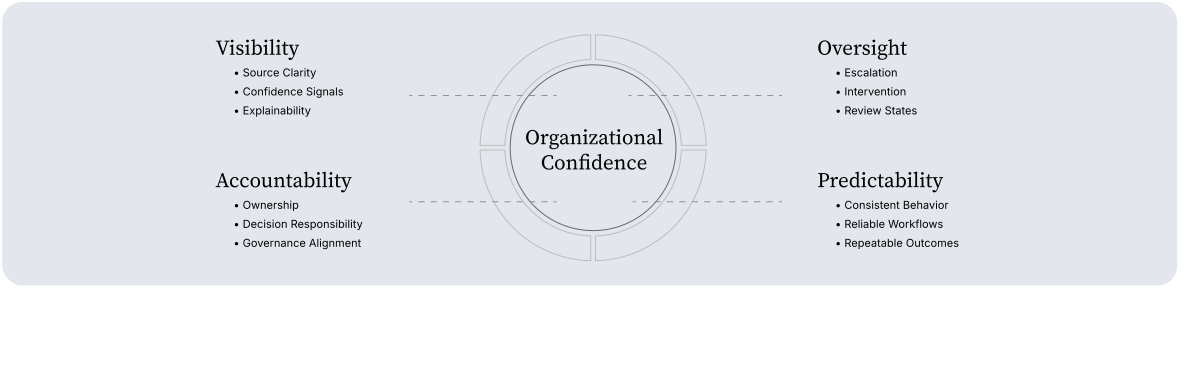
Visibility Creates Confidence
Users rely on systems they can interpret and evaluate.
Oversight Creates Safety
Escalation and intervention structures reduce organizational hesitation.
Accountability Enables Scale
Clear ownership structures allow AI systems to operate responsibly across teams.
Predictability Drives Adoption
Reliable systems reduce hesitation and reinforce repeated usage over time.
Confidence requires coordination
Systems must reinforce each other
1
Visibility & Interpretation
Visible reasoning requires transparent inputs and confidence signals. This allows organizations to evaluate system logic against context, rather than access alone.
2
Oversight & Intervention
Effective oversight is about targeted intervention, not passive surveillance. Systems must define escalation triggers and explicit pathways for human intervention.
3
Accountability & Ownership
Clarity requires defined ownership. Establish decision authority and assign clear responsibility for both automated actions and governance alignment.
4
Predictability & Adoption
Repeatable processes drive behavioral change. Systems must establish consistent performance patterns and behavioral safeguards to reduce operational friction and foster sustainable adoption.
Coordinated execution creates organizational confidence.
Operational Trust
reliable systems enable sustainable adoption
Visibility Must Scale
Visibility must remain consistent across operational workflows.
Oversight Must Integrate
Oversight should support velocity without creating friction.
Predictability Must Persist
Predictable behavior reinforces long-term adoption.